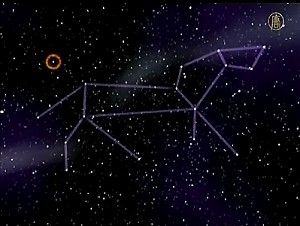
NASA's Kepler spacecraft has begun its search for other Earth-like worlds. The mission, which launched from Cape Canaveral on March 6 2009, will spend the next three-and-a-half years staring at more than 100,000 stars for telltale signs of planets. Kepler has the unique ability to find planets as small as Earth that orbit sun-like stars at distances where temperatures are right for possible lakes and oceans.
For more information:
New space telescope to search for earth-sized planets
Planet-Hunting Spacecraft Beams Home First Images
Telescope can find "oodles" of Earths: NASA
Kepler spacecraft sees its first exoplanets
Kepler Detects an Exoplanet Atmosphere
Spacecraft blasts off in search of 'Earths'
Nasa launches search for second Earth
The Inspiring Boom in "Super-Earths"
Let the Planet Hunt Begin
Kepler Spacecraft
Kepler works!
An artist's illustration of an Earth-like planet. The search for planets that are similar to Earth is one of NASA's main goals. Many planets have already been discovered orbiting other stars, but so far only larger planets (the size of Jupiter or larger) have been found. New missions are being planned by NASA which will be able to detect smaller Earth-sized planets. Some of these missions will also try to detect signs of life on these planets by studying emissions in their atmospheres.
BILLIONS OF EARTHS COULD BE OUT THERE!!
8/9/10
8/8/10
Galaxy has 'billions of Earths'
SOURCE: BBC News
15 February 2009
There could be one hundred billion Earth-like planets in our galaxy, a US conference has heard.
Dr Alan Boss of the Carnegie Institution of Science said many of these worlds could be inhabited by simple lifeforms.
He was speaking at the annual meeting of the American Association for the Advancement of Science in Chicago.
So far, telescopes have been able to detect just over 300 planets outside our Solar System.
Very few of these would be capable of supporting life, however. Most are gas giants like our Jupiter, and many orbit so close to their parent stars that any microbes would have to survive roasting temperatures.
But, based on the limited numbers of planets found so far, Dr Boss has estimated that each Sun-like star has on average one "Earth-like" planet.
This simple calculation means there would be huge numbers capable of supporting life.
"Not only are they probably habitable but they probably are also going to be inhabited," Dr Boss told BBC News. "But I think that most likely the nearby 'Earths' are going to be inhabited with things which are perhaps more common to what Earth was like three or four billion years ago." That means bacterial lifeforms.
Dr Boss estimates that Nasa's Kepler mission, due for launch in March, should begin finding some of these Earth-like planets within the next few years.
Recent work at Edinburgh University tried to quantify how many intelligent civilisations might be out there. The research suggested there could be thousands of them.
This article: http://news.bbc.co.uk/2/hi/science/nature/7891132.stm
For more information:
The Milky Way Could have Billions of Earths
Galaxy may be full of 'Earths,' alien life
15 February 2009
There could be one hundred billion Earth-like planets in our galaxy, a US conference has heard.
Dr Alan Boss of the Carnegie Institution of Science said many of these worlds could be inhabited by simple lifeforms.
He was speaking at the annual meeting of the American Association for the Advancement of Science in Chicago.
So far, telescopes have been able to detect just over 300 planets outside our Solar System.
Very few of these would be capable of supporting life, however. Most are gas giants like our Jupiter, and many orbit so close to their parent stars that any microbes would have to survive roasting temperatures.
But, based on the limited numbers of planets found so far, Dr Boss has estimated that each Sun-like star has on average one "Earth-like" planet.
This simple calculation means there would be huge numbers capable of supporting life.
"Not only are they probably habitable but they probably are also going to be inhabited," Dr Boss told BBC News. "But I think that most likely the nearby 'Earths' are going to be inhabited with things which are perhaps more common to what Earth was like three or four billion years ago." That means bacterial lifeforms.
Dr Boss estimates that Nasa's Kepler mission, due for launch in March, should begin finding some of these Earth-like planets within the next few years.
Recent work at Edinburgh University tried to quantify how many intelligent civilisations might be out there. The research suggested there could be thousands of them.
This article: http://news.bbc.co.uk/2/hi/science/nature/7891132.stm
For more information:
The Milky Way Could have Billions of Earths
Galaxy may be full of 'Earths,' alien life
8/7/10
Telescope sees smallest exoplanet
SOURCE: BBC News
3 February 2009
The smallest planet yet found outside the Solar System has been detected by a French space telescope.
The rocky world is less than twice the size of Earth.
Only a handful of planets have so far been found with a mass comparable to Earth, Venus, Mars or Mercury.
The discovery was made by Corot, an orbiting observatory with a 27cm-diameter telescope to search for planets orbiting other stars.
About 330 of these "exoplanets" have been discovered so far. But most of them have been gas giants similar to Jupiter or Neptune.
"For the first time, we have unambiguously detected a planet that is 'rocky' in the same sense as our own Earth," said Malcolm Fridlund, Corot project scientist from the European Space Agency (Esa).
"We now have to understand this object further to put it into context, and continue our search for smaller, more Earth-like objects with Corot," he added.
The new find, Corot-Exo-7b, orbits its Sun-like star once every 20 hours. Although very close to Earth in terms of width, its mass is several times that of our own planet.
Because the planet is so close to its parent star, its temperature is between 1,000 and 1,500C - far too hot to support life.
Read More:
3 February 2009
The smallest planet yet found outside the Solar System has been detected by a French space telescope.
The rocky world is less than twice the size of Earth.
Only a handful of planets have so far been found with a mass comparable to Earth, Venus, Mars or Mercury.
The discovery was made by Corot, an orbiting observatory with a 27cm-diameter telescope to search for planets orbiting other stars.
About 330 of these "exoplanets" have been discovered so far. But most of them have been gas giants similar to Jupiter or Neptune.
"For the first time, we have unambiguously detected a planet that is 'rocky' in the same sense as our own Earth," said Malcolm Fridlund, Corot project scientist from the European Space Agency (Esa).
"We now have to understand this object further to put it into context, and continue our search for smaller, more Earth-like objects with Corot," he added.
The new find, Corot-Exo-7b, orbits its Sun-like star once every 20 hours. Although very close to Earth in terms of width, its mass is several times that of our own planet.
Because the planet is so close to its parent star, its temperature is between 1,000 and 1,500C - far too hot to support life.
Read More:
8/6/10
Rocky Planets May Form Around Most Sun-like Stars
SOURCE: Universe Today
Feb 18 2008
Astronomers have found numerous Jupiter-like planets orbiting other stars. But because of the limits of our current technology, they haven̢۪t yet found any other terrestrial Earth-like planets out in the universe. But new findings from the Spitzer Space Telescope suggest that terrestrial planets might form around many, if not most, of the nearby sun-like stars in our galaxy. So perhaps, other worlds with the potential for life might be more common than we thought.
A group of astronomers led by Michael Meyer of the University of Tucson, Arizona used Spitzer to survey six sets of stars with masses comparable to our sun, and grouped them by age. "We wanted to study the evolution of the gas and dust around stars similar to the sun and compare the results with what we think the solar system looked like at earlier stages during its evolution," Meyer said. Our sun is about 4.6 billion years old.
They found that at least 20 percent, and possibly as many as 60 percent, of stars similar to the sun are candidates for forming rocky planets.
Read More:
Planet-hunters set for big bounty
Feb 18 2008
Astronomers have found numerous Jupiter-like planets orbiting other stars. But because of the limits of our current technology, they haven̢۪t yet found any other terrestrial Earth-like planets out in the universe. But new findings from the Spitzer Space Telescope suggest that terrestrial planets might form around many, if not most, of the nearby sun-like stars in our galaxy. So perhaps, other worlds with the potential for life might be more common than we thought.
A group of astronomers led by Michael Meyer of the University of Tucson, Arizona used Spitzer to survey six sets of stars with masses comparable to our sun, and grouped them by age. "We wanted to study the evolution of the gas and dust around stars similar to the sun and compare the results with what we think the solar system looked like at earlier stages during its evolution," Meyer said. Our sun is about 4.6 billion years old.
They found that at least 20 percent, and possibly as many as 60 percent, of stars similar to the sun are candidates for forming rocky planets.
Read More:
Planet-hunters set for big bounty
8/4/10
Astronomers search for habitable moons
Source: National Geographic
Exomoon
September 2, 2009--A Jupiterlike planet peeks through the clouds above a so-called exomoon in an artist's rendering. It's possible that NASA's planet-hunting satellite Kepler, launched earlier this year, will find habitable moons as well as Earthlike worlds, astronomers announced this week.
Kepler looks for planets outside our solar system by searching for periodic dips in the brightnesses of distant stars, thought to be due to orbiting planets crossing the faces of the stars.
Now a new model suggests that the probe could also look for changes in the speed and position of a transiting planet caused by the gravitational tug of a moon. Knowing the host planet's size, mass, and distance from its star would then reveal whether the moon might be able to support liquid water, and thus life.
For more information:
Habitable moons could to be spotted by 2014
Scientists devise method to detect exomoons
Astronomers search for habitable moons
Planet wobbles could reveal Earth 2.0
Planet-hunter will find alien moons
Search for life elsewhere expands
How to spot moons far, far away
Detecting Life-Friendly Moons
Habitable Moons
And more
Exomoon
September 2, 2009--A Jupiterlike planet peeks through the clouds above a so-called exomoon in an artist's rendering. It's possible that NASA's planet-hunting satellite Kepler, launched earlier this year, will find habitable moons as well as Earthlike worlds, astronomers announced this week.
Kepler looks for planets outside our solar system by searching for periodic dips in the brightnesses of distant stars, thought to be due to orbiting planets crossing the faces of the stars.
Now a new model suggests that the probe could also look for changes in the speed and position of a transiting planet caused by the gravitational tug of a moon. Knowing the host planet's size, mass, and distance from its star would then reveal whether the moon might be able to support liquid water, and thus life.
For more information:
Habitable moons could to be spotted by 2014
Scientists devise method to detect exomoons
Astronomers search for habitable moons
Planet wobbles could reveal Earth 2.0
Planet-hunter will find alien moons
Search for life elsewhere expands
How to spot moons far, far away
Detecting Life-Friendly Moons
Habitable Moons
And more
Artist’s impression of a hypothetical exomoon in orbit around a Saturn-like planet in another planetary system. (Click image to enlarge)
New Video Sees Earth from Alien Perspective
SOURCE: Space.com
18 July 2008
NASA's Deep Impact spacecraft has made a movie of the moon passing in front of the Earth from the probe's vantage point millions of miles away.
Astronomers plan to use the video to develop techniques to look for Earth-like worlds in other solar systems.
"Making a video of Earth from so far away helps the search for other life-bearing planets in the universe by giving insights into how a distant, Earth-like alien world would appear to us," said Michael A'Hearn of the University of Maryland and the principal investigator for the Deep Impact extended mission.
Deep Impact, which sent an impactor into comet Tempel 1 on July 4, 2005, is currently 31 million miles away from Earth on its way to a flyby of comet Hartley 2 on Nov. 4, 2010.
During its cruise to Hartley 2, Deep Impact will be searching for extrasolar planets.
Read More:
What would Earth look like to alien astronomers? See Video!
18 July 2008
NASA's Deep Impact spacecraft has made a movie of the moon passing in front of the Earth from the probe's vantage point millions of miles away.
Astronomers plan to use the video to develop techniques to look for Earth-like worlds in other solar systems.
"Making a video of Earth from so far away helps the search for other life-bearing planets in the universe by giving insights into how a distant, Earth-like alien world would appear to us," said Michael A'Hearn of the University of Maryland and the principal investigator for the Deep Impact extended mission.
Deep Impact, which sent an impactor into comet Tempel 1 on July 4, 2005, is currently 31 million miles away from Earth on its way to a flyby of comet Hartley 2 on Nov. 4, 2010.
During its cruise to Hartley 2, Deep Impact will be searching for extrasolar planets.
Read More:
What would Earth look like to alien astronomers? See Video!
Trio of 'super-Earths' discovered orbiting one star
SOURCE: CBC News
June 16, 2008
Artist's impression of the trio of super-Earths discovered using the ESO's 3.6-m telescope at La Silla, Chile, after five years of monitoring. The three planets, having 4.2, 6.7, and 9.4 times the mass of the Earth, orbit the star HD 40307 with periods of 4.3, 9.6, and 20.4 days, respectively. (ESO)
European astronomers said Monday they have discovered five "super-Earths" — including three orbiting a single star — which they say suggests Earth-like planets could be very common outside our solar system.
The discoveries, revealed at a conference in France, were made using a spectrograph at the La Silla Observatory in Chile, which is run by the European Organization for Astronomical Research in the Southern Hemisphere, or ESO.
Planet hunter Michel Mayor, best known for discovering the first confirmed planet outside our solar system, said in a statement the finds suggest the search for Earth-like planets has just begun.
Read More:
For more information:
June 16, 2008
Artist's impression of the trio of super-Earths discovered using the ESO's 3.6-m telescope at La Silla, Chile, after five years of monitoring. The three planets, having 4.2, 6.7, and 9.4 times the mass of the Earth, orbit the star HD 40307 with periods of 4.3, 9.6, and 20.4 days, respectively. (ESO)
European astronomers said Monday they have discovered five "super-Earths" — including three orbiting a single star — which they say suggests Earth-like planets could be very common outside our solar system.
The discoveries, revealed at a conference in France, were made using a spectrograph at the La Silla Observatory in Chile, which is run by the European Organization for Astronomical Research in the Southern Hemisphere, or ESO.
Planet hunter Michel Mayor, best known for discovering the first confirmed planet outside our solar system, said in a statement the finds suggest the search for Earth-like planets has just begun.
Read More:
For more information:
New rocky planet found in constellation Leo
SOURCE: Physorg.com
April 9, 2008
Spanish and UCL (University College London) scientists have discovered a possible terrestrial-type planet orbiting a star in the constellation of Leo. The new planet, which lies at a distance of 30 light years from the Earth, has a mass five times that of our planet but is the smallest found to date. One full day on the new planet would be equivalent to three weeks on Earth.
The team of astronomers from the Spanish Research Council (CSIC) working with Dr Jean-Philippe Beaulieu, a visiting astrophysicist at UCL, made the discovery from model predictions of a new exoplanet (meaning planet outside our solar system) orbiting a star in the constellation of Leo.
Simulations show that the exoplanet, dubbed GJ 436c, orbits its host star (GJ 436) in only 5.2 Earth days, and is thought to complete a revolution in 4.2 Earth days, compared to the Earth’s revolution of 24 hours and full orbit of 365 days. On Earth, a full day (sunset to sunset) coincides quite closely with the rotation period. On the new planet these two periods do not coincide, since the orbital translation period and the rotation period are very similar. For this reason, a full day on the new planet would take four planetary years, or roughly 22 Earth days.
The study, published this week in Astrophysical Journal, predicted the presence of a small exoplanet perturbing an inner planet (already known), producing changes on its orbit. A re-analysis of archival radial velocities also permitted the identification of a signal that perfectly matches the simulations and corresponds to a planet in resonance with the inner one, meaning that for every two orbits of the known planet the new planet completes one.
Ignasi Ribas, lead author of the study from CSIC, says: “After final confirmation, the new exoplanet will be the smallest found to date. It is the first one to be identified from the perturbations exerted on another planet of the system. Because of this, the study opens a new path that should lead to the discovery of even smaller planets in the near future, with the goal of eventually finding worlds more and more similar to the Earth.”
Dr Jean-Philippe Beaulieu, visiting astrophysicist at UCL Physics and Astronomy, says: “This is the fourth super-Earth planet discovered. This planet is the hot twin of the frozen super-Earth (OGLE-2005-BLG-390lb) we discovered by microlensing two years ago. Other previously discovered planets of this class are the two hot super-Earths Gl 581b and Gl 876d detected by their Doppler wobble.“
Dr Giovanna Tinetti, UCL Physics and Astronomy who recently calculated the putative properties of this planet, says: “Calculations indicate that the temperature of the planet could be within 400-700 Kelvin [127-427 Celsius], but it could locally be as low as 350 K [77 C] at the poles, depending on the type of atmosphere.”
Most of the 280 or so planets discovered to date are gas giants similar to Jupiter, although some with masses below 10 times that of the Earth have already been found. Planets with masses of between one and 10 times the Earth are often dubbed super-Earths. In this case, current models predict that the new planet is a rocky type and has a radius some 50 per cent larger than the Earth.
Source: University College London
This article: http://www.physorg.com/news126960070.html
For more information Small Earth-like Planet Discovered
April 9, 2008
Spanish and UCL (University College London) scientists have discovered a possible terrestrial-type planet orbiting a star in the constellation of Leo. The new planet, which lies at a distance of 30 light years from the Earth, has a mass five times that of our planet but is the smallest found to date. One full day on the new planet would be equivalent to three weeks on Earth.
The team of astronomers from the Spanish Research Council (CSIC) working with Dr Jean-Philippe Beaulieu, a visiting astrophysicist at UCL, made the discovery from model predictions of a new exoplanet (meaning planet outside our solar system) orbiting a star in the constellation of Leo.
Simulations show that the exoplanet, dubbed GJ 436c, orbits its host star (GJ 436) in only 5.2 Earth days, and is thought to complete a revolution in 4.2 Earth days, compared to the Earth’s revolution of 24 hours and full orbit of 365 days. On Earth, a full day (sunset to sunset) coincides quite closely with the rotation period. On the new planet these two periods do not coincide, since the orbital translation period and the rotation period are very similar. For this reason, a full day on the new planet would take four planetary years, or roughly 22 Earth days.
The study, published this week in Astrophysical Journal, predicted the presence of a small exoplanet perturbing an inner planet (already known), producing changes on its orbit. A re-analysis of archival radial velocities also permitted the identification of a signal that perfectly matches the simulations and corresponds to a planet in resonance with the inner one, meaning that for every two orbits of the known planet the new planet completes one.
Ignasi Ribas, lead author of the study from CSIC, says: “After final confirmation, the new exoplanet will be the smallest found to date. It is the first one to be identified from the perturbations exerted on another planet of the system. Because of this, the study opens a new path that should lead to the discovery of even smaller planets in the near future, with the goal of eventually finding worlds more and more similar to the Earth.”
Dr Jean-Philippe Beaulieu, visiting astrophysicist at UCL Physics and Astronomy, says: “This is the fourth super-Earth planet discovered. This planet is the hot twin of the frozen super-Earth (OGLE-2005-BLG-390lb) we discovered by microlensing two years ago. Other previously discovered planets of this class are the two hot super-Earths Gl 581b and Gl 876d detected by their Doppler wobble.“
Dr Giovanna Tinetti, UCL Physics and Astronomy who recently calculated the putative properties of this planet, says: “Calculations indicate that the temperature of the planet could be within 400-700 Kelvin [127-427 Celsius], but it could locally be as low as 350 K [77 C] at the poles, depending on the type of atmosphere.”
Most of the 280 or so planets discovered to date are gas giants similar to Jupiter, although some with masses below 10 times that of the Earth have already been found. Planets with masses of between one and 10 times the Earth are often dubbed super-Earths. In this case, current models predict that the new planet is a rocky type and has a radius some 50 per cent larger than the Earth.
Source: University College London
This article: http://www.physorg.com/news126960070.html
For more information Small Earth-like Planet Discovered
8/1/10
MIT aims to search for Earth-like planets with Google's help
SOURCE: MIT News
March 19, 2008
MIT scientists are designing a satellite-based observatory that they say could for the first time provide a sensitive survey of the entire sky to search for planets outside the solar system that appear to cross in front of bright stars. The system could rapidly discover hundreds of planets similar to the Earth.
Google, the Internet search powerhouse that in recent years has expanded to include mapping of the stars as well as the surfaces of the moon and Mars and which has an ongoing collaboration with NASA's Ames Research Center, provided a small seed grant to fund development of the wide-field digital cameras needed for the satellite. Because of the huge amount of data that will be generated by the satellite, Google has an interest in working on the development of ways of sifting through that data to find useful information.
Dubbed the Transiting Exoplanet Survey Satellite (TESS), the satellite could potentially be launched in 2012. "Decades, or even centuries after the TESS survey is completed, the new planetary systems it discovers will continue to be studied because they are both nearby and bright," says George R. Ricker, senior research scientist at the Kavli Institute for Astrophysics and Space Research at MIT and leader of the project. "In fact, when starships transporting colonists first depart the solar system, they may well be headed toward a TESS-discovered planet as their new home."
Read More:
Google Joins MIT in Search for Earth-like Planets
March 19, 2008
MIT scientists are designing a satellite-based observatory that they say could for the first time provide a sensitive survey of the entire sky to search for planets outside the solar system that appear to cross in front of bright stars. The system could rapidly discover hundreds of planets similar to the Earth.
Google, the Internet search powerhouse that in recent years has expanded to include mapping of the stars as well as the surfaces of the moon and Mars and which has an ongoing collaboration with NASA's Ames Research Center, provided a small seed grant to fund development of the wide-field digital cameras needed for the satellite. Because of the huge amount of data that will be generated by the satellite, Google has an interest in working on the development of ways of sifting through that data to find useful information.
Dubbed the Transiting Exoplanet Survey Satellite (TESS), the satellite could potentially be launched in 2012. "Decades, or even centuries after the TESS survey is completed, the new planetary systems it discovers will continue to be studied because they are both nearby and bright," says George R. Ricker, senior research scientist at the Kavli Institute for Astrophysics and Space Research at MIT and leader of the project. "In fact, when starships transporting colonists first depart the solar system, they may well be headed toward a TESS-discovered planet as their new home."
Read More:
Google Joins MIT in Search for Earth-like Planets
7/18/10
Extrasolar Planet Art Gallery
Here are some art pictures of extrasolar planets or exoplanets and other worlds beyond our solar system. Click the images for larger pictures.
Weird Worlds
Gallery — Strangest Alien Planets
What is an Extrasolar Planet?, click here & here.

Weird Worlds
Gallery — Strangest Alien Planets
What is an Extrasolar Planet?, click here & here.

Subscribe to:
Posts (Atom)